Dishes, prices and 86 come from your POS. The dashboard is the layer on top: what to highlight, what to promote, who hears about it — and the numbers behind all of it. From any phone.
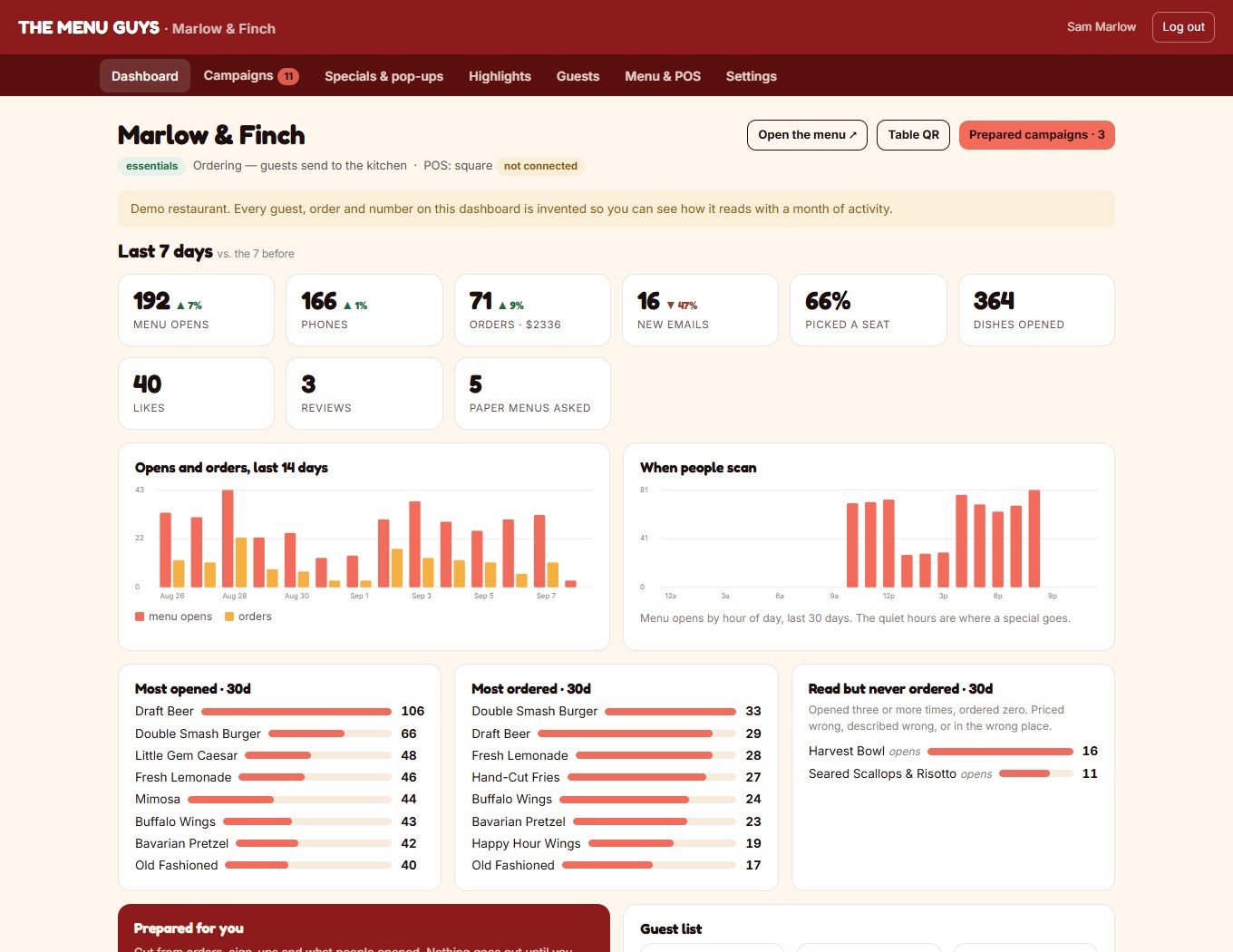
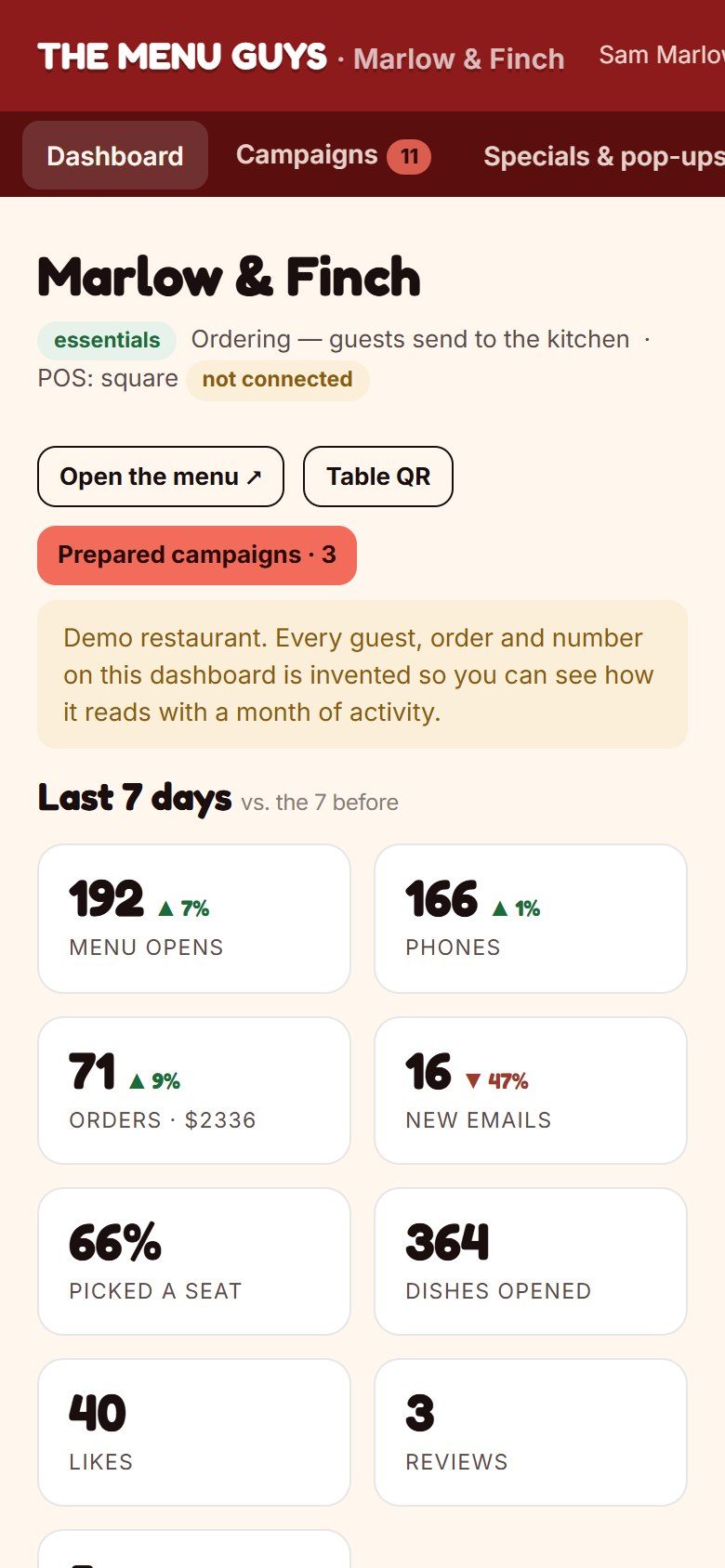
Menu opens, phones, orders and revenue, open tabs, new emails, how many picked a chair, ratings at close-out with the private notes, dishes opened, likes, reviews, paper menus asked for. Opens and orders by day. When people scan, by hour — the quiet hours are where a special goes.
What people look at and what they actually buy, from real POS sales. When the lists disagree, that's a price or a description to fix.
Opened three or more times in 30 days, ordered zero. Priced wrong, described wrong, or in the wrong place on the menu. Named, every month.
The share of scans in each language, from the menu itself. The first honest answer most owners get to "do we need the translation?"
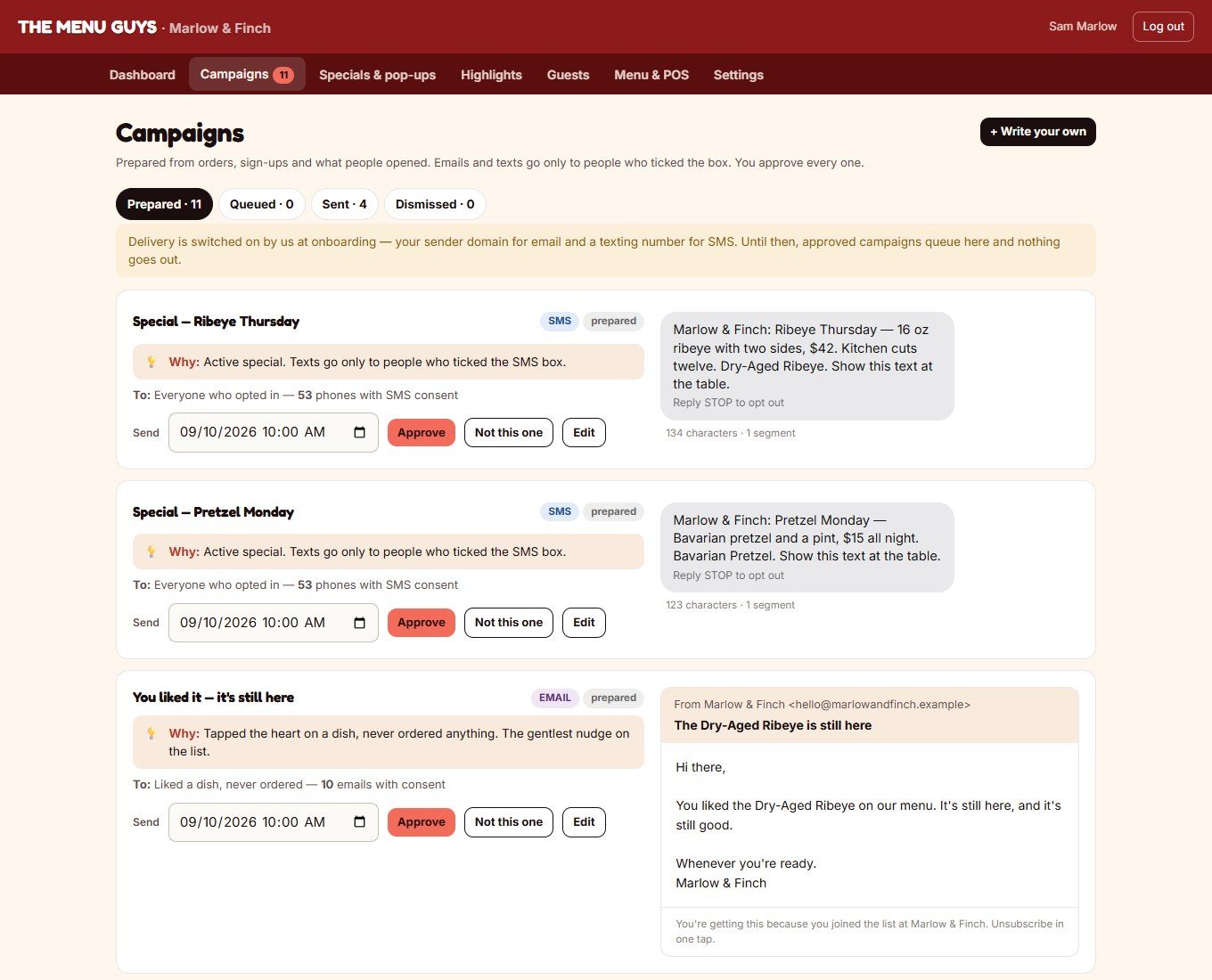
The dashboard writes the campaigns. Each one comes with the reason it exists, the exact audience and a preview of the email or the text, per guest — their first name, their usual dish. You approve it, edit it, or say "not this one."
Emails and texts go only to people who ticked the box. SMS gets its own unticked box with the rate disclosure and STOP. We don't bend this.

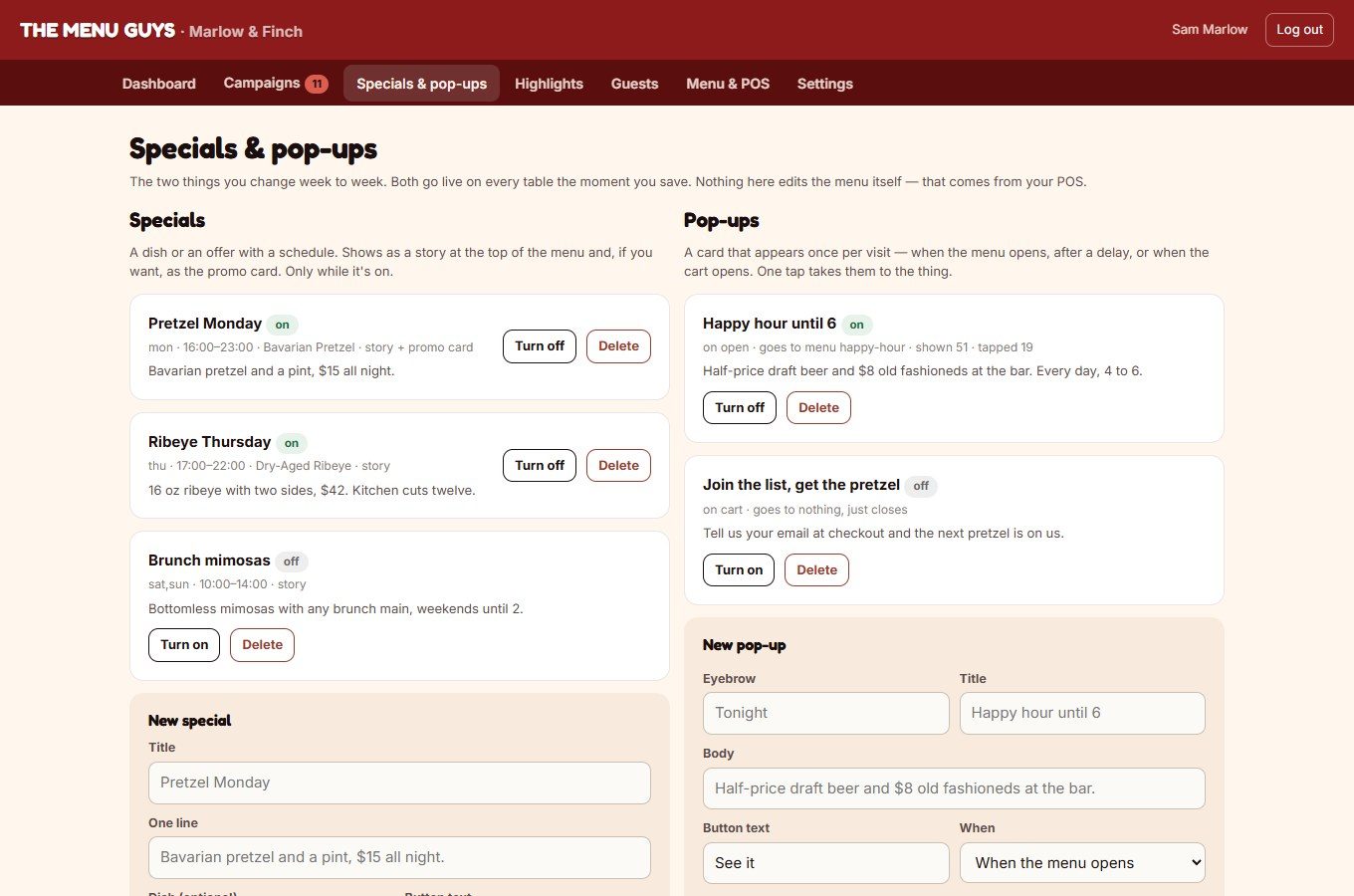
A special is a dish or an offer with a schedule — Pretzel Monday, 4 to 11. While it's on, it's a story at the top of the menu and, if you want, the promo card. A pop-up is a card that appears once per visit: when the menu opens, after thirty seconds, or when the cart opens. One tap takes them to the dish.

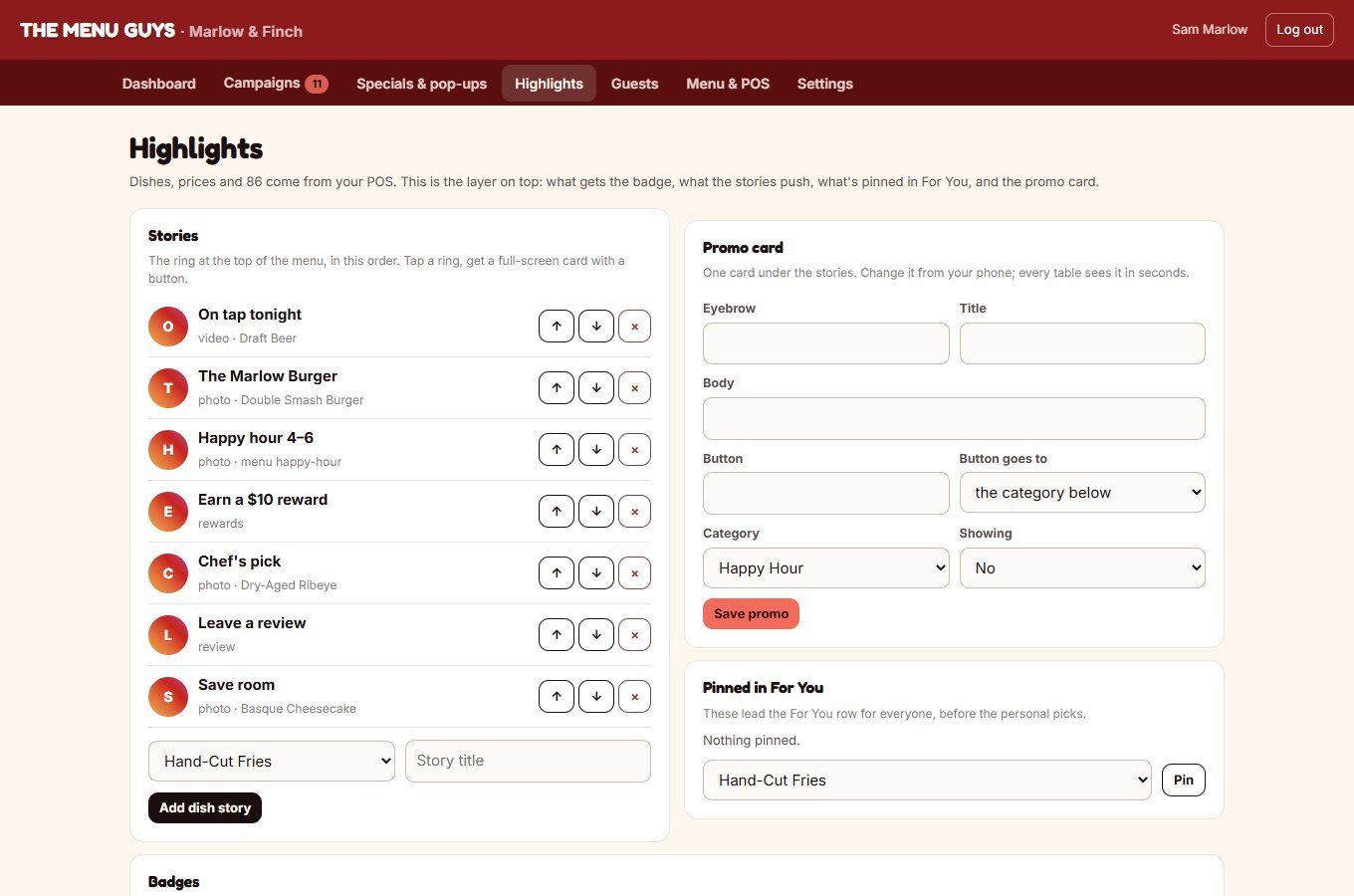
Signature and Featured badges. The order of the stories. What's pinned at the front of For You. The promo card. Hide a dish without touching the POS. That's the whole editing surface — because everything else rides on the system you already run.

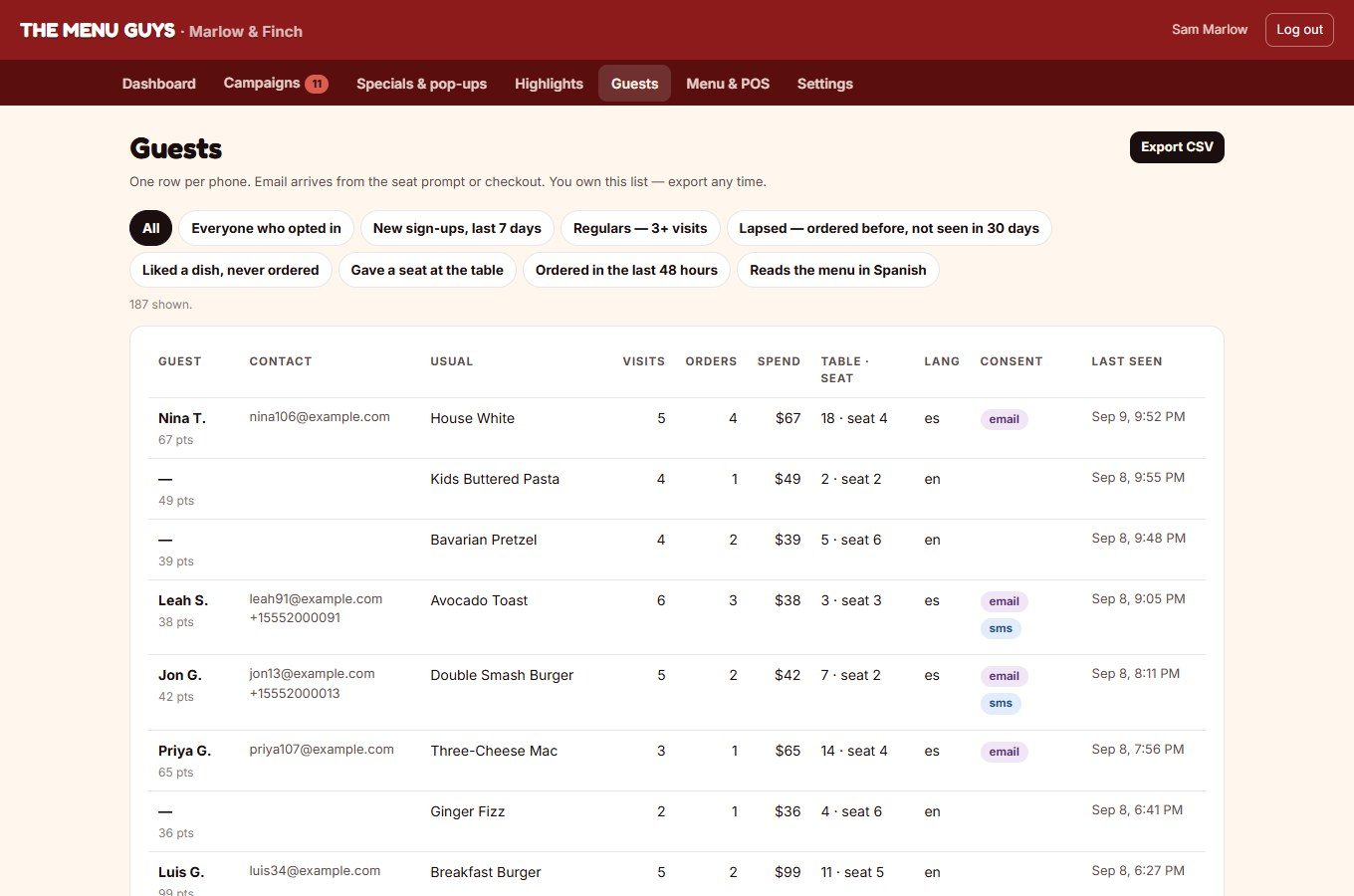
Name, contact, their usual dish, visits, orders, spend, table and chair, the language they read in, what they consented to. Filter by regulars, new sign-ups, lapsed, liked-but-never-ordered, Spanish readers. Export the CSV any time. If you leave, it leaves with you.

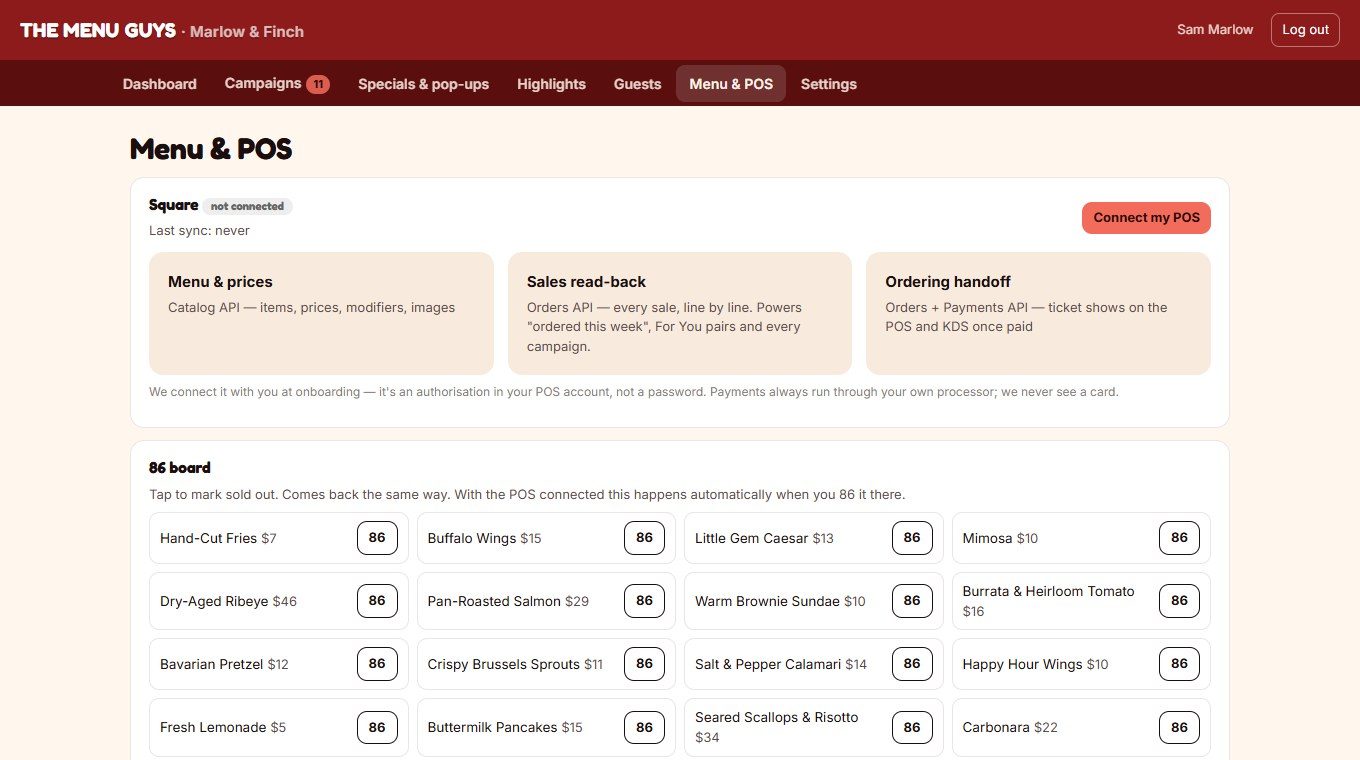
The POS card shows what's connected and what it syncs: menu and prices, sales read-back, the ordering handoff. An 86 board for the nights the POS isn't the fastest way. Connecting is an authorisation in your POS account, done with you at onboarding — never a password.

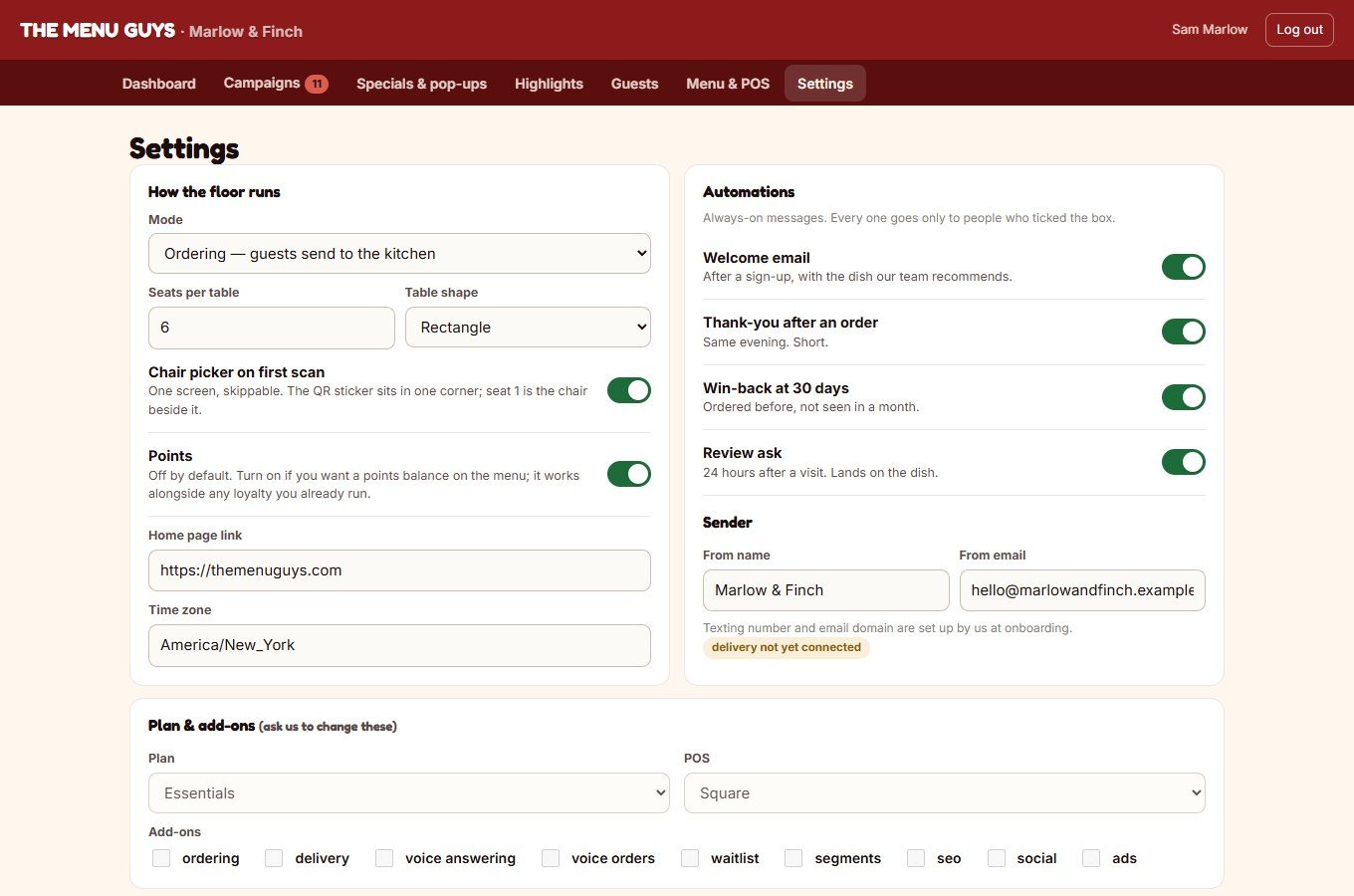
Your floor plan for the chair picker, card-on-file and the 12-hour auto close-out, your Google review link. Points on or off — off by default, and it works alongside any loyalty you already run. The always-on automations: welcome, thank-you, win-back, review ask. Each with its own switch.

Everything above works on the phone in your apron pocket. 86 a dish, flip a special, approve a text — between tables.

Twenty minutes, no pressure. You'll be looking at your own menu, in your guests' languages, before we've said hello.